 升級VIP會員
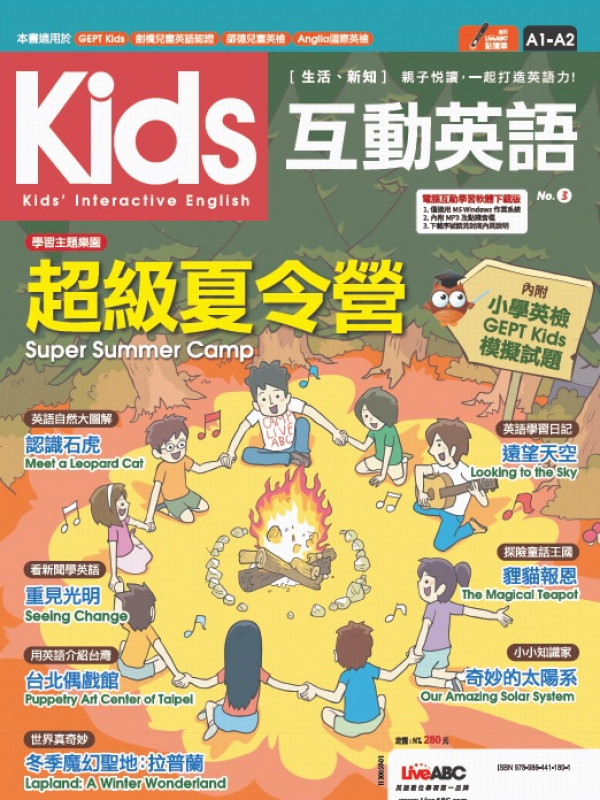
Kids 互動英語 No.3
Dr. Knowledge 小小知識家: Our Amazing Solar System
Dr. Knowledge 小小知識家: Our Amazing Solar System
參考教案-以英文學齡三年以上學生為例
Reference Lesson Plan – for learners with at least three years of English exposure
Suggested Teaching Procedure
Reference Lesson Plan – for learners with at least three years of English exposure
| Stage | Content | Time | Objectives |
|---|---|---|---|
| 1. Warm up | Introduction and YouTube Video | 10 mins | Activate prior knowledge and introduce the eight planets |
| 2. Vocabulary | Vocabulary and Listen, Point and Act | 10 mins | Learn key vocabulary through pictures and actions |
| 3. Reading | Listen, Read and Check Understanding | 15 mins | Understand the main ideas and details of the reading |
| 4. Activity I | Planet Order Challenge | 10 mins | Review the names and order of the eight planets |
| 5. Activity II | Rocky or Gas | 10 mins | Classify the planets and practice complete sentences |
| 6. Wrap up | Quick Review and Oral Exit Ticket | 5 mins | Review the lesson and check students’ understanding |
- Students can recognize and name the eight planets in the solar system.
- Students can say the names of the eight planets in the correct order.
- Students can understand basic facts about the Sun and the planets.
- Students can distinguish between rocky planets and gas giants.
- Students can understand and use the vocabulary solar system, closest, rocky, gas, center, circle, gravity, hold out, and spin.
- Students can answer simple questions and use complete sentences to describe planets.
Steps
(1) Show pp. 12–13 and ask students some warm-up questions.
- What can you see in the pictures?
- What is the big yellow object?
- Do you know the name of any planet?
- Which planet do we live on?
- How many planets do you think there are?
Before playing the video, give students two watching questions.
- How many planets are there in our solar system?
- What do all the planets orbit?
Ask students to watch and listen without opening their books.
(4) Discuss the answers after watching.
A. Teacher asks: “How many planets are there in our solar system?”
Students answer: “There are eight planets.”
B. Teacher asks: “What do all the planets orbit?”
Students answer: “They orbit the Sun.”
Teacher writes the following sentence on the board:
“Eight planets orbit the Sun.”
(5) Play the video for the second time.
1. Pause after each planet appears and have students listen and repeat.
- Mercury
- Venus
- Earth
- Mars
- Jupiter
- Saturn
- Uranus
- Neptune
3. Teacher may divide the names into two groups to help students remember them.
Mercury, Venus, Earth and Mars.
Jupiter, Saturn, Uranus and Neptune.
(6) Ask students to open their books to pp. 12–13.
1. Play the video again or say the planet names randomly.
2. Students listen and point to the correct planet in the textbook.
For example:
A. Teacher says: “Point to Mercury.”
Students point to Mercury.
B. Teacher says: “Point to Saturn.”
Students point to Saturn.
C. Teacher says: “Point to Neptune.”
Students point to Neptune.
(7) Ask some questions based on the video.
1. Which planet is closest to the Sun? --> Mercury is closest to the Sun.
2. Which planet is the brightest planet in the sky? --> Venus is the brightest planet in the sky.
3. Which planet is our home planet? --> Earth is our home planet.
4. Which planet is known as the red planet? --> Mars is known as the red planet.
5. Which planet is the largest planet? --> Jupiter is the largest planet.
6. Which planet has distinct rings? --> Saturn has distinct rings.
7. Which planet is very cold and cloudy? --> Uranus is very cold and cloudy.
8. Which planet is a gas giant? --> Neptune is a gas giant.
Teacher may use the expression gas giant instead of made entirely of gas to match the wording in the textbook.
(8) Connect the video to the reading.
Teacher says: “We know that there are eight planets in our solar system. Are all the planets the same? Some planets are rocky, and some are gas giants. Let’s read and learn more about them.”
2. Vocabulary – pp. 12–13 - 10 mins
Steps
(1) Use the textbook audio to introduce the vocabulary.
Students listen to the pronunciation and point to the words or pictures in the textbook.
(2) Read through the vocabulary with students.
- solar system
- closest
- scoop
- flavor
- rocky
- gas
- made out of
- mostly
- center
- circle
- gravity
- hold out
- spin
1. Solar system
Teacher points to the whole picture on pp. 12–13.
Teacher says: “The Sun and the eight planets make up our solar system.”
2. Closest
Teacher points to Mercury and the Sun.
Teacher says: “Mercury is closest to the Sun.”
3. Rocky
Teacher makes two fists to represent rocks.
Teacher says: “Rocky planets are made out of rocks and metals.”
4. Gas
Teacher opens both hands and moves them slowly through the air.
Teacher says: “Gas giants are mostly made out of gas.”
5. Center
Teacher points to the Sun in the middle of the picture.
Teacher says: “The Sun is at the center of our solar system.”
6. Circle
Teacher moves one finger in a circle around the Sun.
Teacher says: “The planets circle the Sun.”
7. Gravity
Teacher brings both hands together.
Teacher says: “Gravity holds our solar system together.”
8. Hold out
Teacher stretches out both arms.
Teacher says: “Hold out your arms.”
9. Spin
Teacher moves one finger in a circular motion.
Teacher says: “Spin around slowly.”
(4) Play Listen, Point and Act.
1. Teacher says one vocabulary word.
2. Students point to the correct picture or perform the correct action.
For example:
- Teacher says: “Center.” Students point to the Sun.
- Teacher says: “Circle.” Students move one finger in a circle.
- Teacher says: “Rocky.” Students make two fists.
Teacher checks whether students can understand the words without translation.
3. Reading – pp. 12–13 - 15 mins
Steps
(1) Ask some leading questions before reading.
- What is at the center of the solar system?
- Which planet is closest to the Sun?
- Which planet do we live on?
- Do all the planets look the same?
- Which planets have rings?
- Students listen and follow the reading in their books.
- Ask students to point to each planet when they hear its name.
- Pause after each paragraph and guide students to read sentence by sentence.
- Check students’ pronunciation of the planet names and key vocabulary.
- Teacher reviews the order of the planets.
- Ask students:
- A. “How many planets does our solar system have?” >> Our solar system has eight planets.
- B. “Which planet is closest to the Sun?” >> Mercury is closest to the Sun.
- C. “Which planet comes after Earth?” >> Mars comes after Earth.
- D. “Which planet comes before Neptune?” >> Uranus comes before Neptune.
- Teacher explains that the expression two flavors compares the two kinds of planets to two different flavors of ice cream.
- Teacher says: “The planets come in two types: rocky planets and gas giants.” Ask students to find the rocky planets in the picture.
- Mercury
- Venus
- Earth
- Mars
- Ask students to find the gas giants in the picture.
- Jupiter
- Saturn
- Uranus
- Neptune
(6) Explain the third paragraph.
Teacher points to the Sun.
A. Teacher asks: “Is the Sun a planet?”
Students answer: “No, it isn’t.”
B. Teacher asks: “What is the Sun?”
Students answer: “It is a star.”
C. Teacher asks: “Where is the Sun?”
Students answer: “The Sun is at the center of our solar system.”
D. Teacher asks: “What do all the planets circle?”
Students answer: “All the planets circle the Sun.”
(7) Read the final paragraph together.
- Teacher says: “You can be a planet, too. Hold out your arms and spin around slowly.”
- Students hold out their arms and use one finger or their upper body to show the movement.
- Students should not spin quickly in the classroom.
1. Our solar system has eight planets. >> True.
2. Venus is closest to the Sun. >> False.
3. Earth is a rocky planet. >> True.
4. Jupiter is a gas giant. >> True.
5. The Sun is a planet. >> False.
6. All the planets circle the Sun. >> True.
7. Gravity holds our solar system together. >> True.
4. Activity I: Planet Order Challenge - 10 mins
Steps
(1) Ask students to look at the planet picture on pp. 12–13.
- Read the names of the eight planets together.
- Mercury, Venus, Earth, Mars, Jupiter, Saturn, Uranus and Neptune.
- Teacher says one planet name.
- One student from each team points to the correct planet in the textbook.
- The student who points to the correct planet first gets one point.
1. Teacher asks: “What comes after Mercury?”
Students answer: “Venus comes after Mercury.”
2. Teacher asks: “What comes after Earth?”
Students answer: “Mars comes after Earth.”
(4) Play Which Planet Is Missing.
- Teacher reads the planet names but leaves out one planet.
- “Mercury, Venus, Earth, Mars, Jupiter, Uranus, Neptune.”
- Teacher asks: “Which planet is missing?”
- Students answer: “Saturn is missing.”
- “Mercury, Earth, Mars, Jupiter, Saturn, Uranus, Neptune.”
- Students answer: “Venus is missing.”
5. Activity II: Rocky or Gas - 10 mins
Steps
(1) Review the two types of planets.
Teacher says: “There are two types of planets in the reading. Rocky planets and gas giants.”
(2) Teach students two actions.
- For a rocky planet, students make two fists.
- For a gas giant, students open both hands and move them through the air.
- Students show the correct action and say the answer.
- Teacher says: “Earth.”
- Students make two fists and say: “Earth is a rocky planet.”
- Teacher says: “Saturn.”
- Students open both hands and say: “Saturn is a gas giant.”
- Mercury is a rocky planet.
- Venus is a rocky planet.
- Earth is a rocky planet.
- Mars is a rocky planet.
- Jupiter is a gas giant.
- Saturn is a gas giant.
- Uranus is a gas giant.
- Neptune is a gas giant.
Student A points to one planet in the textbook and asks: “What kind of planet is it?”
Student B answers: “It is a rocky planet.” or “It is a gas giant.”
(6) Encourage students to add one more sentence.
- Earth is a rocky planet. It is made out of rocks and metals.
- Jupiter is a gas giant. It is mostly made out of gas.
6. Wrap up - 5 mins
Steps
(1) Ask students some quick review questions.
1. How many planets are there in our solar system? >> There are eight planets.
2. Which planet is closest to the Sun? >> Mercury is closest to the Sun.
3. Which planet is our home planet? >> Earth is our home planet.
4. Which planet is the largest? >> Jupiter is the largest planet.
5. Which planet has distinct rings? >> Saturn has distinct rings.
6. Is Earth a rocky planet or a gas giant? >> Earth is a rocky planet.
7. Is Neptune a rocky planet or a gas giant? >> Neptune is a gas giant.
8. What is at the center of our solar system? >> The Sun is at the center of our solar system.
9. What do all the planets circle? >> All the planets circle the Sun.
10. What holds our solar system together? >> Gravity holds our solar system together.
(2) Oral Exit Ticket
- Teacher points to one planet in the textbook.
- Each student says one sentence about the planet.
(3) Finish the lesson by reading the eight planet names together one final time.
“Mercury, Venus, Earth, Mars, Jupiter, Saturn, Uranus and Neptune.”